Magnus De Maerteleire, AI engineer
I build AI systems, from research models to agents I use every day.
MSc in Artificial Intelligence from KU Leuven, cum laude. Now at INSEAD for the Master in Management, in France and Singapore.
For my thesis I tested genomic deep-learning models on 190 personal genomes. With three classmates I developed a CLIP labelling method that beat a published baseline on three benchmarks, and I built a sandboxed multi-agent system that runs on my own server.
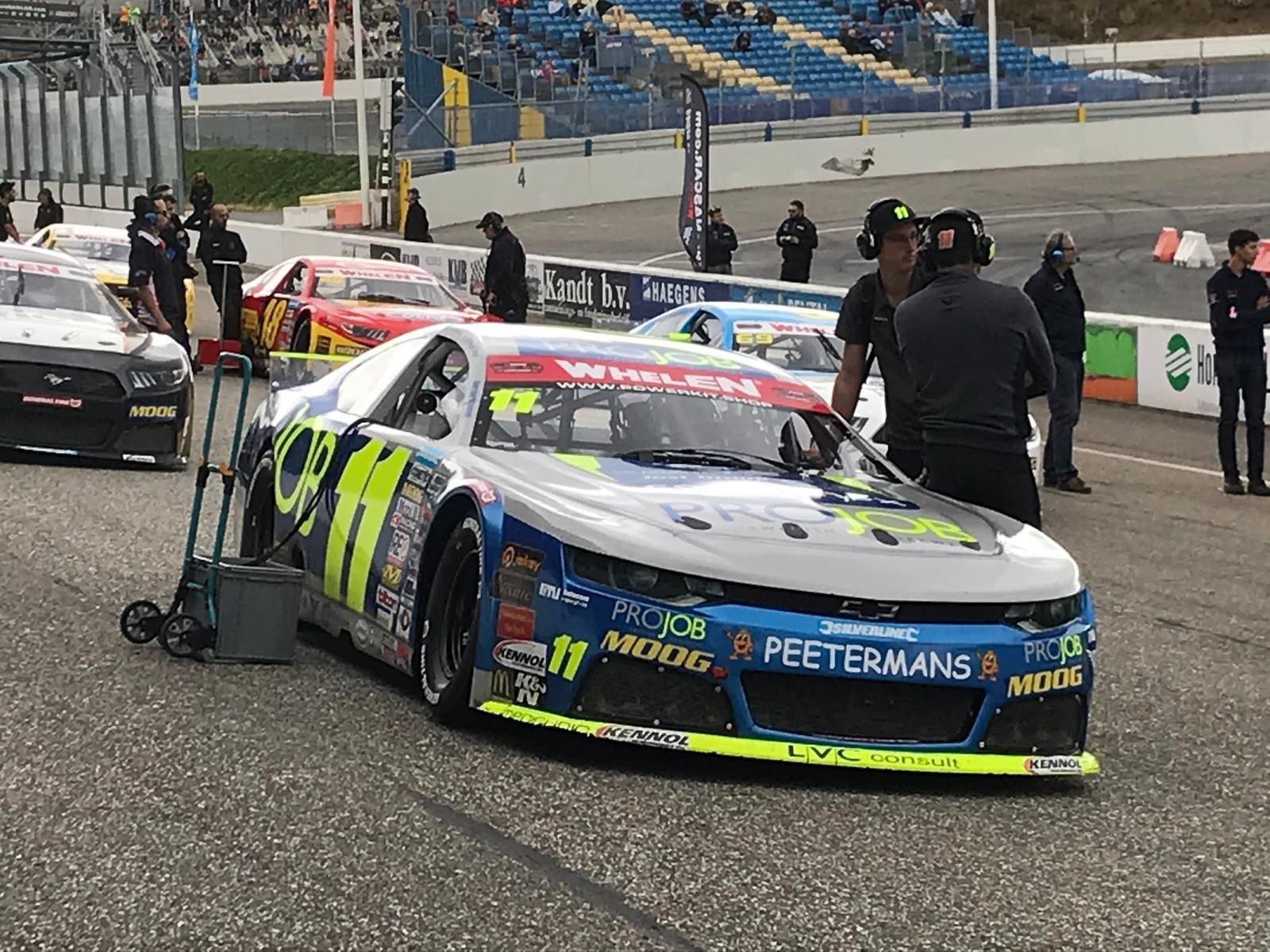
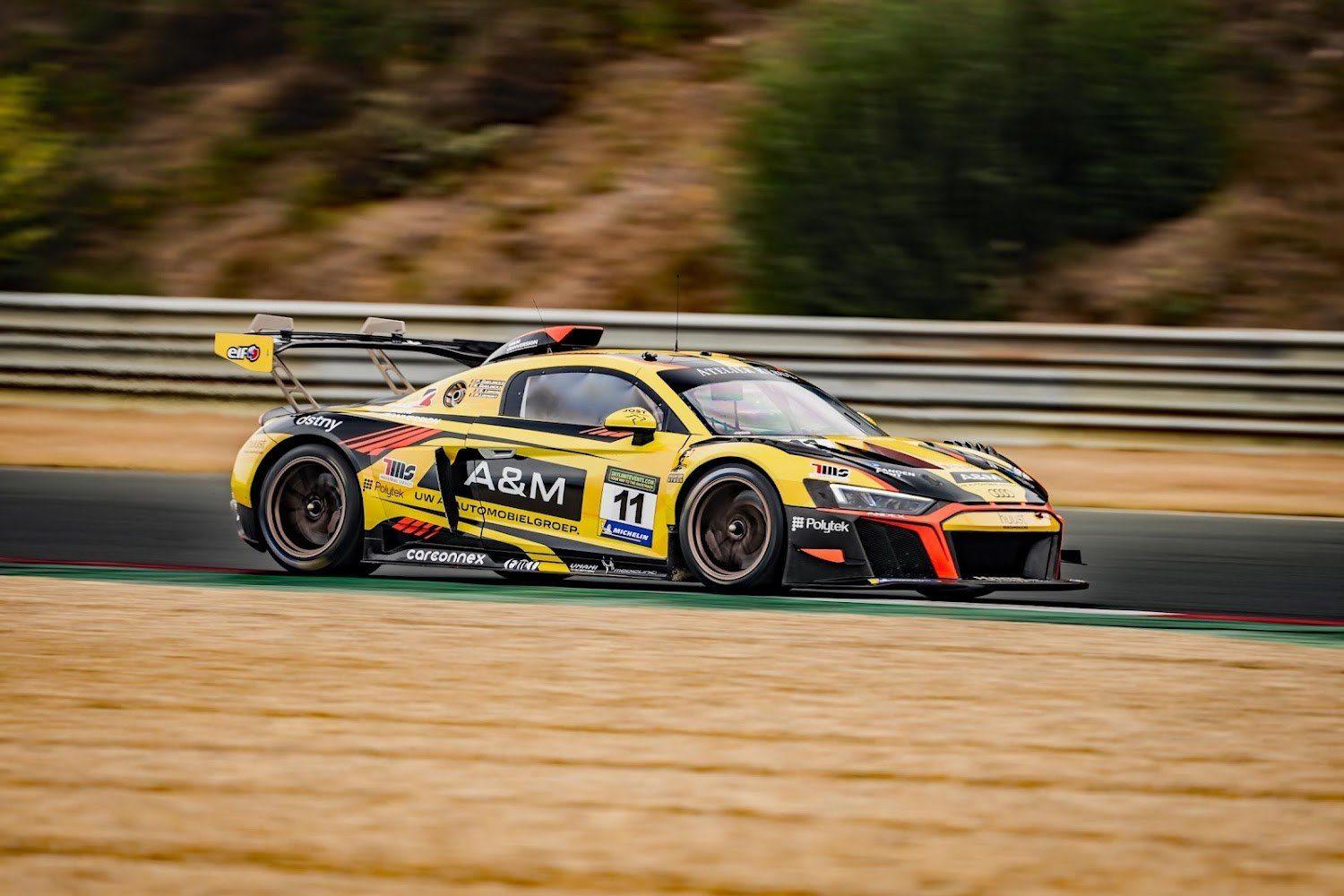
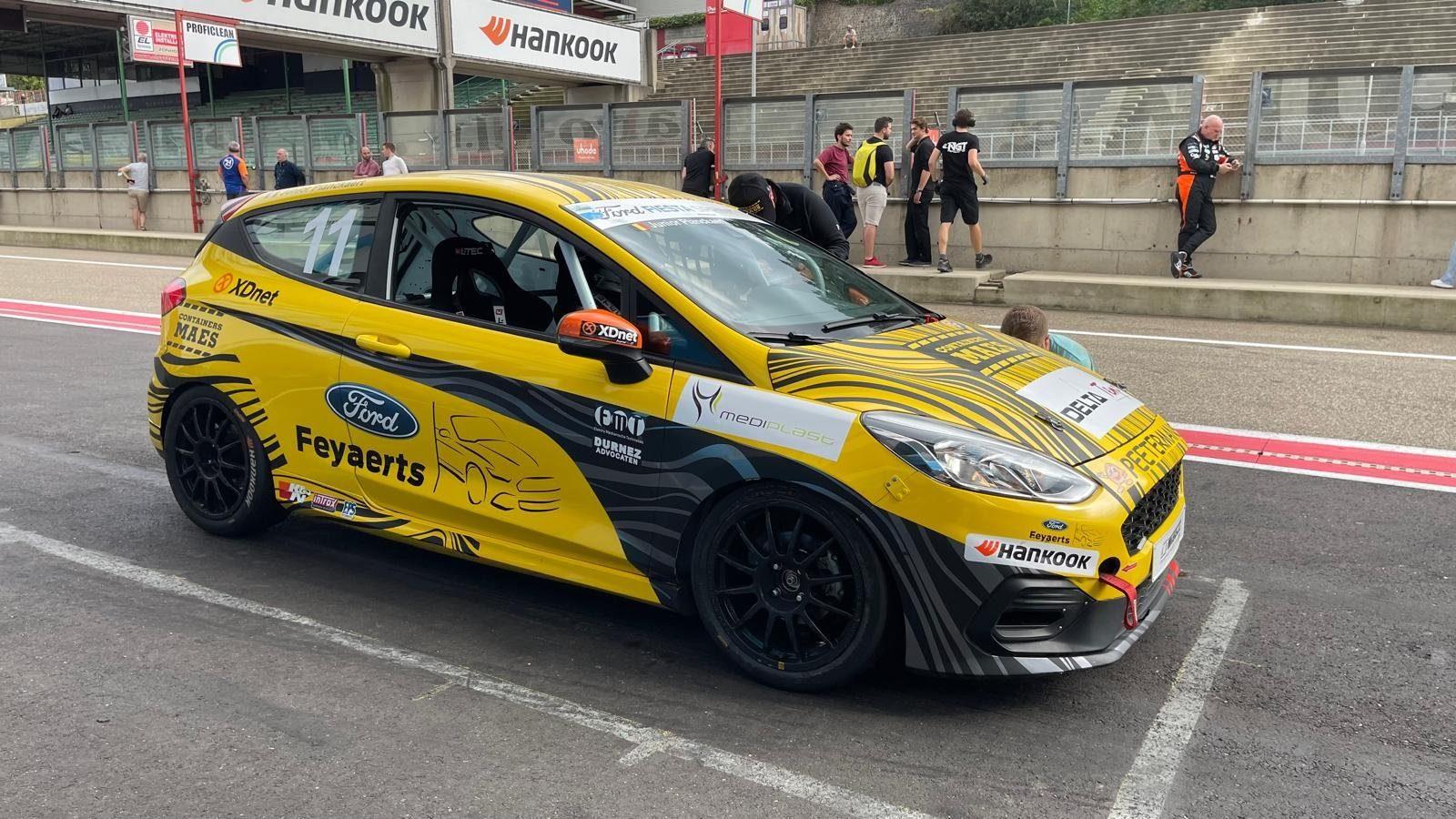
During my bachelor's I worked as a developer at Lux49, a medical software startup, where I built an AI model that measures muscle activity from facial images. Alongside my studies I also founded FCO2, a motorsport sponsorship company in Luxembourg.
- Available
- July 2027
- Work rights
- EU citizen
- Currently
- INSEAD, France and Singapore
Index8 projects
| Project | Kind | Key result | Year |
|---|---|---|---|
| Predicting regulatory variation from personal genomes | Thesis | 0.89 cohort, < 0.10 per donor | 2026 |
| Neurosymbolic AI for handwritten formulas | Course | 98.7% vs 7.1% | 2026 |
| Automatic concept labels with CLIP | Team project | +11 points on Pascal VOC | 2025 |
| Sandboxed multi-agent assistant | Personal | In daily use, 200+ roles | |
| Active-learning ranking app | Personal | Spearman 0.81 on the demo | 2026 |
| Constrained translation with grid beam search | Course | chrF 76.4 vs 72.4 | 2025 |
| Near-duplicate detection in 5 million tweets | Course | 100 s vs 220+ days | 2025 |
| NBA player tracking with Spark | Course | SIMD 1.3× to 3.8× | 2025 |
Selected projects4 of 8
- Year
- 2025–2026
- Context
- MSc thesis, Aerts Lab, KU Leuven
- Status
- Code private (lab data)
Predicting regulatory variation from personal genomes
2025–2026 / MSc thesis, Aerts Lab, KU Leuven / Code private (lab data)
Can deep-learning models predict how one person's DNA changes gene activity, and does that help predict Parkinson's disease? A large-scale test on 190 personal genomes.
Spearman up to 0.89 at cohort level, but below r = 0.10 per donor: a clear, quantified limit of today's models.
Both models get the cohort average right. Per donor, even the best cell type stays below r = 0.10, and only on regions pre-selected for known regulatory effects; on the Parkinson’s regions the signal is indistinguishable from zero. - Python
- PyTorch
- Scooby
- CREsted
- scikit-learn
- HPC
- Single-cell multiome
- Year
- 2026
- Context
- Learning and Reasoning course, KU Leuven
- Status
- Code on GitHub
Neurosymbolic AI for handwritten formulas
2026 / Learning and Reasoning course, KU Leuven / Code on GitHub
Reading a sequence of handwritten digits and operators and computing the result, comparing logic built into the model with logic added to the loss.
With five images, a plain neural network falls to 7.1% accuracy; putting the logic in the architecture keeps it at 98.7%.
Test accuracy on the final result. With five images the plain network has to learn too many combinations; with the rules in the architecture it only has to recognise single symbols. - Python
- PyTorch Lightning
- Probabilistic logic programming
- CNNs
- Year
- 2025
- Context
- Project AI course, KU Leuven, team of four
- Status
- Code on GitHub
Automatic concept labels with CLIP
2025 / Project AI course, KU Leuven, team of four / Code on GitHub
Labelling the concepts that explainable AI models need, without any manual labelling.
Beat the Stochastic-CBM baseline on all three datasets, from 73.1% to 84.1% balanced accuracy on Pascal VOC.
Step 1
Similarity
CLIP embeds every image x and concept description t. Their cosine similarities fill the matrix: sij = EI(xi)⊤ ET(tj).
Step 2
Two Gaussians
For each concept (one column), two Gaussians are fitted to the histogram of similarities.
Step 3
Ranking
A custom score measures how well the curves separate. Poorly separated concepts are removed.
Step 4
Thresholds
Each kept concept gets its own threshold, computed from its fitted Gaussians.
The four steps. Only step 1 uses the images; the labels are used to evaluate, never by the method. - Python
- PyTorch
- CLIP
- SciPy
- NumPy
- Year
- Ongoing
- Context
- Personal project
- Status
- In daily use, code private
Sandboxed multi-agent assistant
Personal project / In daily use, code private
A multi-agent system on my own server that keeps my planning on track, from INSEAD deadlines to my job search. Agents that research the open web run inside a sandbox; the assistant that works with my personal accounts acts behind explicit approval rules.
In daily use around the clock: my planning, deadlines and 200+ researched roles in one place; sending, submitting or deleting always waits for my approval.
The core agents, one job database, one server; more agents can be added for new tasks. The research agent never touches my accounts or files. - Claude Code
- MCP
- Python
- SQLite
- Linux
- Local speech-to-text
More projects
- 2026
Active-learning ranking app
Personal project / In daily use, standalone version on GitHub
A ranking I trust that decides where I spend application time, and sharpens with every choice.
- 2025
Constrained translation with grid beam search
Advanced NLP course, KU Leuven, about 100 hours / Code on GitHub
Higher chrF than ordinary beam search at every beam width tested, up to 76.4 versus 72.4.
- 2025
Near-duplicate detection in 5 million tweets
Big Data Analytics course, KU Leuven / Code private (course rules)
Full dataset in 100 seconds instead of an estimated 220+ days by brute force, with 0.91 recall.
- 2025
NBA player tracking with Spark
Big Data Analytics course, KU Leuven / Code private
Three distributed jobs over 25-frames-per-second tracking data, and a SIMD speed-up of 1.3× to 3.8×.
Experience
- Luxembourg
FCO2
Motorsport sponsorship, events and vehicle wrapping
2022–nowManaging Director
Founded the business next to my studies: 14 racing sponsorship deals across five series, a vehicle-wrapping line I started from scratch, and a team of three.
 See the cars and deals
- Howald, Luxembourg
Medical software startup
2021–2022Developer
Built an AI model that measures muscle activity from facial images, and front and back ends for medical apps across the Apple ecosystem, in a five-person team.
Visit lux49.lu
Education
- France and Singapore
INSEAD
2026–2028Master in Management
VP of Careers at the Tech, Media & Telecom club; member of the AI and Entrepreneurship clubs. Graduating January 2028.
- Leuven, Belgium
KU Leuven
2024–2026MSc Engineering: Artificial Intelligence
Graduated cum laude. Thesis on deep-learning models that predict gene regulation from personal genomes, applied to Parkinson’s disease. Student representative for the first cohort.
Read about the thesis - Leuven, Belgium
KU Leuven
2021–2024Bachelor of Engineering
Major in electrical engineering, minor in computer science.
Additional information
- Work rights
- Belgian citizen, EU
- Languages
- Dutch (native), English (fluent), French (conversational)
- Technical
- Python, PyTorch, Keras, C, SQL, JavaScript, Java, Next.js, AI-assisted development with Claude Code and Codex
- Making
- Posters and illustration in Illustrator and Photoshop; 3D printing, large-format printing, laser and vinyl cutting
- Interests
- Padel, chess, racing history, architecture